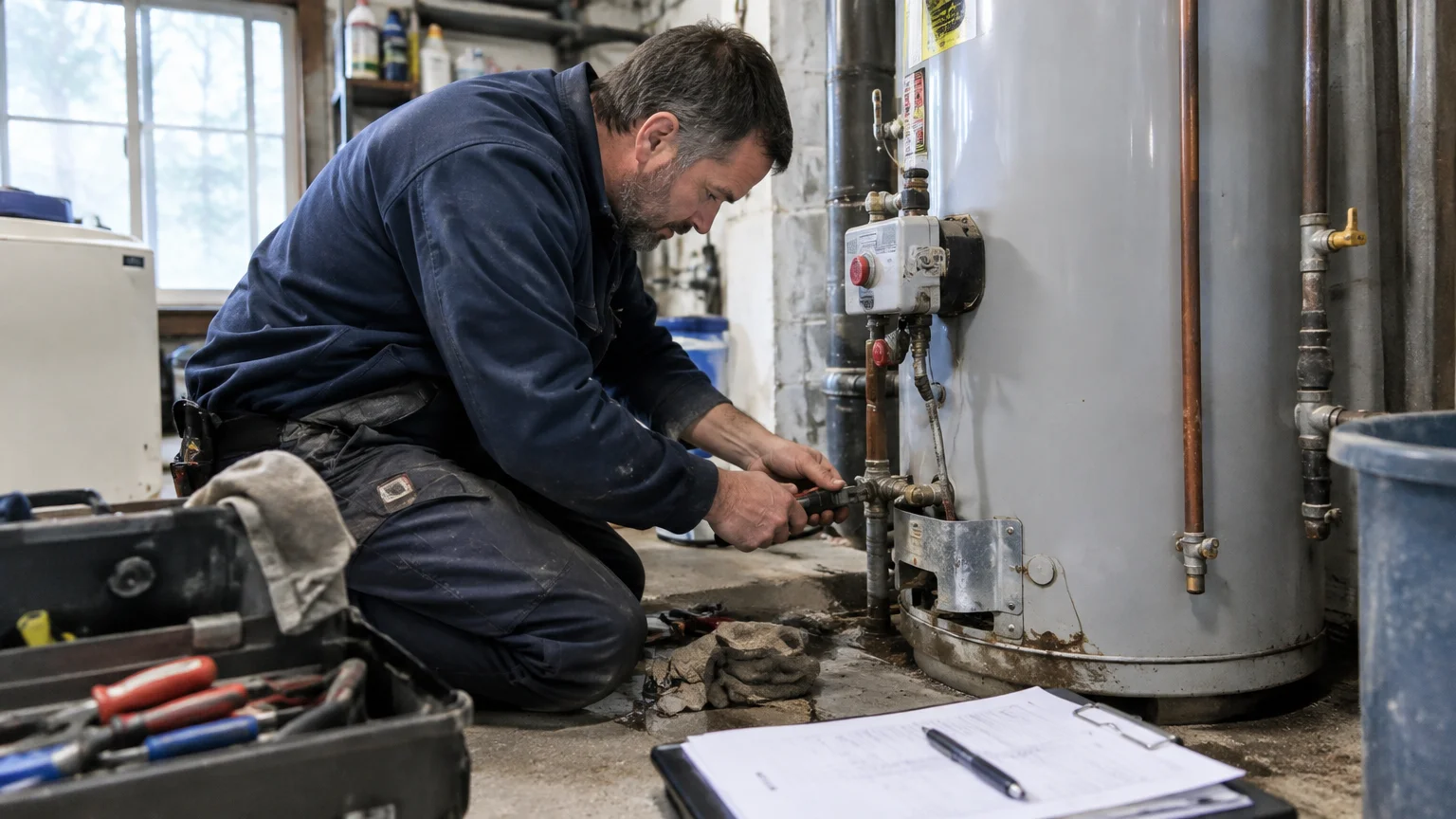
Water heater repair cost for a commercial property depends on the fault, unit type, access, parts, and urgency. A small control repair usually needs less work than a tank leak, burner fault, or major wiring issue. A plumber can test the system first and confirm the final cost in a written quote.
A water heater problem can affect a restaurant, office, apartment building, school, or shop. Lost hot water may disrupt cleaning, bathrooms, tenants, workers, and daily work. Fast action can limit damage, but careful hiring helps prevent more problems later.
Grand Terrace Plumber helps property owners understand repair choices before work starts. This guide covers common faults, quote details, repair choices, maintenance, and ways to choose a qualified plumber.
Table of Contents
- How much does commercial water heater repair cost?
- What types of commercial water heater repairs are most common?
- What affects commercial water heater repair pricing?
- When should a business repair or replace a water heater?
- How can businesses compare commercial plumbing quotes?
- How can property owners reduce future water heater costs?
- How do you choose a qualified commercial water heater plumber?
- Frequently Asked Questions
- Conclusion
How much does commercial water heater repair cost?
Commercial water heater repair cost changes with the problem, heater size, fuel type, access, and parts. A simple control issue often needs less work than a leaking tank or damaged heat exchanger. The final cost is confirmed in a written quote after testing.
Commercial systems may serve many fixtures at once. They can use storage tanks, tankless units, boilers, heat pumps, gas burners, electric elements, pumps, valves, and control panels. Each part can change the repair work. The plumber must identify the model and find the true cause first.
What factors determine the final repair cost?
The main factors are the type of fault, the age of the unit, and access to it. A heater in a clear service room is easier to check than one behind stored goods, locked panels, or finished walls. Safe access also matters when power, gas, or water must be shut off.
Parts can change the work as well. A common thermostat may be easy to find, while an old control board or rare burner part may need more planning. Rust, water damage, mineral buildup, and poor past repairs can add more work.
How does repair compare with replacement?
Repair may be the better choice when the tank is sound and one part has failed. Water heater replacement may make more sense when the tank leaks, faults return, or the unit cannot meet the building’s needs. The review should include safety, downtime, energy use, service life, and future demand.
A plumber should explain both choices when replacement may be wise. The owner can then compare a short repair with the risk of keeping an old system. No single choice suits every building.
What types of commercial water heater repairs are most common?
Common repairs involve heating parts, controls, valves, leaks, pressure, and temperature. A commercial plumber should test the system before changing parts. This helps prevent a new part from being installed when another fault caused the symptom.
Commercial water heaters may use gas, electricity, heat pumps, or other approved designs. The repair must match the system. Fuel-burning units also need safety checks and proper venting.
Tank, burner, heating element, and thermostat repairs
Tank problems may include corrosion, sediment, damaged fittings, and leaking connections. A tank leak may come from a valve or pipe, but water from the tank body often signals a larger issue. The source must be found before repair is approved.
Gas units may need burner cleaning, ignition repair, gas valve tests, or vent checks. Electric units may need element, thermostat, wiring, or control repairs. A failed thermostat can cause weak heat, overheating, or repeated breaker trips.
Tankless systems may need flow sensor, ignition, scale, heat exchanger, or control repairs. Tankless water heater installation also needs correct sizing, venting, water flow, and power or gas supply. Poor installation can lead to repeated faults.
Leaks, pressure problems, and temperature issues
Leaks can start at unions, valves, relief devices, pipes, or tank fittings. A pressure problem may involve an expansion tank, regulator, blocked line, or relief valve. A relief valve is a safety part that releases excess pressure when pressure becomes unsafe.
Temperature complaints may mean the heater is not making enough hot water. They may also mean the setting is wrong, the mixing valve has failed, or demand is too high. A plumber should test supply, controls, flow, and recovery before suggesting a fix.
What affects commercial water heater repair pricing?
Commercial repair costs reflect the full work needed to diagnose, reach, repair, test, and return the system to service. Businesses should compare the work included rather than one short figure with another. A clear quote makes those differences easier to see.
The same symptom can have different causes. No hot water may come from a failed element, tripped safety control, gas problem, low flow, or damaged control board. Testing separates a small repair from a larger system fault.
System size, fuel type, and equipment design
Large systems often have more parts and controls than small units. A property with several heaters may need sequencing checks. Sequencing controls decide when each unit runs so the system can meet demand.
Fuel type changes the work. Gas equipment needs combustion, ignition, and vent checks. Electric equipment needs safe power isolation and electrical tests. Heat pump systems need different checks for airflow, controls, drainage, and related parts.
Older or unusual equipment may need more research. The model number, installation date, service history, and available parts help the plumber plan. A clear equipment label can save time during the first visit.
Access, urgency, labor, and required parts
Access affects work when equipment is in a tight closet, roof space, basement, or secured room. Staff may need to move items, unlock doors, or plan a shutdown. Commercial work may also need to fit around tenants, customers, food service, or production.
Urgent problems may need faster scheduling and temporary steps to protect the building. A burst connection, active leak, or unsafe gas condition needs prompt attention. Staff should explain the symptoms and follow safe shutdown instructions while waiting.
Parts may include valves, controls, elements, burners, sensors, seals, or pipe fittings. The quote should state whether parts are included and whether hidden damage could change the work. The final cost is confirmed after the plumber checks the actual condition.
When should a business repair or replace a water heater?
A business should repair a heater when the tank or heat exchanger remains sound and the fault is limited. Replacement deserves review when the unit leaks from its body, fails often, cannot meet demand, or has unsafe or outdated parts.
The decision should consider more than the latest repair. Owners should review downtime, service records, water demand, space, fuel supply, safety, and future building plans. A reliable plumber can explain the risks of each choice.
Signs that repair may be the better option
Repair may fit when the tank is sound, the unit is fairly new, and one clear part has failed. It may also work when the heater meets demand and has a good service record. Repair can restore service without changing the building layout.
Common repair signs include:
- A failed thermostat, sensor, valve, burner, or heating element
- A loose connection without damage to the tank body
- One control fault with no wider system damage
- Normal hot water demand with one isolated problem
- A unit that has received regular inspection and care
When age, damage, or repeated failures point to replacement
Replacement may be wiser when the tank body leaks, corrosion is widespread, or faults keep returning. Repeated failures can point to poor sizing, scale, pressure problems, old equipment, or an installation fault. A new system may also fit a building that has changed use.
Businesses should plan when replacement seems likely. Waiting for total failure can lead to rushed choices and longer downtime. Planning allows time to review tankless systems, storage space, venting, electrical needs, and local approval rules.
How can businesses compare commercial plumbing quotes?
Businesses can compare quotes by checking the work scope, equipment details, parts, testing, exclusions, and steps for restoring service. The lowest-looking option may not include the same work. A useful quote gives the owner enough detail to make a fair choice.
A quote should follow an inspection when safe and practical. Photos, model information, test results, and access notes can explain the recommendation. Emergency conditions may require protective work before a full repair plan is ready.
What a detailed water heater repair quote should include
A detailed quote should name the equipment, explain the confirmed fault, and list the proposed repair. It should show which parts will be replaced, what testing follows, and whether cleanup or removal is included. If the cause is still uncertain, the quote should explain the next test.
The document should also list limits. These may include hidden damage, hard access, unavailable parts, code changes, or work outside the stated scope. Clear wording helps prevent confusion after the system is opened.
Questions to ask before approving the work
The decision-maker should ask who will do the work and what qualifications apply. Ask whether the company carries proper insurance. It is also wise to ask how nearby equipment will be protected and how hot water service will be tested.
Other useful questions include:
- What caused the failure, and how was it tested?
- Is repair practical, or should replacement be reviewed?
- Which parts are included in the written scope?
- Could access, code work, or hidden damage change the scope?
- What maintenance should follow the repair?
How can property owners reduce future water heater costs?
Property owners can reduce future repair costs through planned care, early leak checks, correct sizing, and clear access. Prevention cannot stop every failure, but it can find small problems before they disrupt a building.
A maintenance plan should match the equipment and building use. A restaurant, apartment property, office, and warehouse may have different demand patterns. The plan should follow the maker’s instructions and local rules.
Maintenance practices that support system reliability
Routine checks can include visible leaks, odd sounds, temperature changes, pressure symptoms, corrosion, and error codes. Staff should know how to report these signs. They should not open gas controls, bypass safety devices, or remove electrical covers.
Sediment and scale can reduce performance in some systems. A qualified plumber can explain whether cleaning, flushing, anode rod replacement, valve testing, or other care suits the equipment. An anode rod is a replaceable part that helps protect some tanks from rust.
When a pipe bursts, staff should shut off water if safe and report the issue. Electricity near standing water is dangerous. Businesses should know where the main shutoff, heater valves, and electrical or gas controls are located.
Planning for access, compliance, and equipment replacement
Clear access makes inspection and repair safer. Storage should not block the heater, shutoff valves, panels, vents, or service space. Managers should keep model details, manuals, past work records, and warranty papers together.
Replacement planning should review demand, recovery needs, space, fuel, venting, drainage, controls, and local approval rules. Commercial water heater installation may need help from owners, tenants, inspectors, electricians, or other trades.
Early planning also helps businesses compare tank and tankless systems. A tankless unit may suit some properties, but it still needs the right flow, capacity, venting, and care. The building should guide the choice.
How do you choose a qualified commercial water heater plumber?
A qualified commercial water heater plumber should have the required license, suitable insurance, commercial experience, and training for the equipment. The company should explain the work clearly and provide a written scope before non-emergency repairs begin.
Grand Terrace Plumber can help Grand Terrace property owners review water heater needs based on the building and equipment. Local knowledge may help with access, permit questions, weather, and service planning. Qualifications and clear communication still matter most.
Licensing, insurance, experience, and relevant qualifications
License rules vary by state and local authority. Owners should check the rules for the property. Insurance helps protect the business and building during work. Commercial experience matters because larger systems have more controls and greater demand.
The plumber should understand gas safety, electrical isolation, pressure relief, venting, water quality, and maker instructions when these areas apply. A good contractor explains limits instead of promising a quick fix for every problem.
Warning signs of unreliable plumbing contractors
Warning signs include vague scopes, pressure to approve work without inspection, unclear qualifications, missing insurance details, and refusal to explain repair or replacement choices. A contractor who cannot identify the equipment or describe basic safety steps may not be suitable.
Owners should also be careful when a proposal hides parts, testing, exclusions, or possible code work. Clear records matter to owners, tenants, insurers, and future service workers. Trust grows when the plumber answers plainly and documents the work.
Frequently Asked Questions
Which parts of the repair are included in the quoted cost?
Commercial water heater repair cost may include diagnosis, access, parts, repair work, safety testing, and system testing. The exact scope depends on the fault and equipment. A written quote should list included work and exclusions. The final amount is confirmed after the actual condition is checked.
How long might a commercial water heater repair take?
Repair time depends on the fault, access, parts, system size, and safety checks. A simple control repair may finish sooner than a tank, burner, or wiring repair. If a part is unavailable, a return visit may be needed. The quote should explain the expected work order.
What water heater checks can business staff safely handle themselves?
Staff can report symptoms, clear access, check visible shutoff locations, and follow emergency shutdown instructions. They should not open gas controls, work on electrical parts, bypass safety devices, or repair pressure equipment. Qualified service is needed for fuel, wiring, pressure, internal parts, or diagnosis.
How can staff tell whether the water heater is leaking?
Staff can look for wet floors, ceiling stains, dripping valves, damp walls, unusual meter movement, or falling system pressure. Hidden leaks may not be visible. If water is near power or the source is unclear, staff should keep away and arrange professional help.
How should a business choose between repair and replacement?
Replacement may be better when the tank leaks, faults repeat, parts are hard to find, or the system cannot meet demand. Repair may fit a newer unit with one isolated fault. The choice depends on condition, records, safety, capacity, access, and future building needs.
Key takeaways
- Water heater repair cost depends on the fault, equipment, access, parts, and urgency.
- A leaking tank, repeated failure, or unsafe system may require a replacement review.
- A detailed quote should explain diagnosis, parts, testing, exclusions, and possible changes.
- Planned maintenance and clear access can help limit avoidable disruption.
- Businesses should choose a licensed, insured plumber with commercial experience.
Conclusion
Commercial water heater problems can affect safety, workers, tenants, customers, and daily work. The best choice starts with a clear diagnosis, a detailed quote, and an honest review of repair and replacement. Owners should consider condition, demand, service history, and future plans before approving work.
For commercial properties in the wider Grand Terrace area, including Downtown Grand Terrace, Blue Mountain, Highgrove, Colton, Loma Linda, Riverside, South San Bernardino, and nearby Inland Empire communities, Grand Terrace Plumber can help explain practical next steps. Contact us to arrange professional plumbing support for the property.