Slow drains in commercial restrooms often mean that waste is building up or a pipe is partly blocked. Businesses can protect clean spaces by spotting trouble early, taking a few safe steps, and keeping track of affected fixtures. If clogs return or several drains slow down, a plumber should check the system before water backs up.
A sink that drains slowly may seem like a small issue during a busy day. Yet staff, customers, and tenants all need clean restrooms and break rooms. A simple check can help a business find trouble before it interrupts daily work.
Table of Contents
- Why are slow drains in commercial restrooms a serious problem?
- What causes slow drains in commercial restrooms and break rooms?
- What signs suggest a slow drain needs prompt attention?
- What can happen if a business ignores a slow drain?
- What should staff do when a commercial drain slows down?
- When should a business call a commercial plumber?
- How can businesses prevent recurring slow drains?
- Key takeaways
- Frequently Asked Questions
- Conclusion
Why are slow drains in commercial restrooms a serious problem?
Slow drains in commercial restrooms can affect hygiene, comfort, and daily work. They may also point to a growing clog or trouble farther along the drain line. Quick action helps keep shared spaces open and may reveal the cause before water backs up.
Restrooms and break rooms serve many people during the workday. A sink that holds water can make handwashing harder. Bad smells or a clogged toilet can leave customers and staff with a poor impression. For property managers, one tenant’s report may point to trouble affecting other spaces too.
A slow drain does not always mean that the plumbing has failed. Hair, soap, food scraps, or other waste may be narrowing the pipe. But if water drains more slowly over time, the blockage may be growing. A drain is the pipe path that carries used water away from a sink, toilet, or floor drain. When something partly blocks that path, water takes longer to flow away.
Drain problems can also involve plumbing vents. A vent is a pipe that lets air move through the plumbing system. This helps wastewater flow the way it should. A blocked drain or vent may cause gurgling, odors, or poor drainage. The cause may not be clear from looking at the sink or floor drain alone.
Offices, shops, and apartment buildings can benefit from early checks. Grand Terrace Plumber can help businesses understand when a slow drain needs professional care. Commercial plumbing means the pipes, fixtures, and drain systems in business and multi-unit buildings. More people may use these fixtures than in a single home, so the right care plan can differ.
What causes slow drains in commercial restrooms and break rooms?
Slow drains often start when waste builds up inside a pipe or blocks its opening. In restrooms, common causes include hair, soap, paper, and dirt. In break rooms, food scraps, grease, and drink residue can collect in sink drains.
Restroom sinks collect hair and soap during daily use. Soap can mix with hair and dirt, then stick to the inside of a pipe. Paper towels and wipes may also cause clogs if they go into a sink or toilet. Items meant for a waste bin should not be flushed or washed down a drain.
Break-room sinks face other risks. Food scraps may gather near the drain, while fats and oils can coat the inside of pipes. Grease may seem runny when warm, but it can cool and stick to pipe walls. Over time, this layer may catch more waste and slow the flow. A sink strainer can catch food scraps, but grease still belongs in a suitable waste container.
Some slow drains come from a problem deeper in the system. A shared branch line carries wastewater from more than one fixture. If that line is partly blocked, several sinks or floor drains may slow down at once. A damaged pipe, poor slope, or vent trouble may also affect drainage.
Businesses should note when the problem began and which fixtures are affected. If one restroom sink is slow while nearby fixtures work well, the clog may be close to that sink. If sinks, toilets, or floor drains in a shared area have trouble, the cause may be farther along the line. This pattern can help a plumber choose what to check.
What signs suggest a slow drain needs prompt attention?
A drain needs prompt attention when it keeps slowing, clogs again soon after clearing, or affects more than one fixture. Gurgling, bad smells, or water rising through a floor drain can also point to a deeper blockage. A backup or leak needs urgent care.
One slow sink may have a small clog close to the fixture. But if the same problem returns after basic cleaning, waste may remain in the pipe or keep entering it. Staff should not treat repeat clogs as normal. A short record of when the problem returns can show if it is getting worse.
Listen for gurgling as water leaves a sink or toilet. This sound may happen when air cannot move well through the drain system. A bad smell may come from waste in the pipe, a dry trap, or another plumbing issue. A trap is the curved pipe under a fixture that holds water and helps keep sewer gas out of the room. Odors that last need a proper check.
Notice how many fixtures have trouble. Several slow sinks in one restroom may share a line. A slow sink and a bubbling toilet nearby may point to a wider problem. In an apartment building, reports from tenants on the same floor or in nearby units can help show that a shared line needs attention.
Treat sewage, standing wastewater, or water coming up through a floor drain as urgent. Keep people away from the area and tell the property manager. If there is also a water leak, protect nearby items only if it is safe. Do not use the affected fixtures until the cause is known.
What can happen if a business ignores a slow drain?
Ignoring a slow drain can let a partial blockage grow into a backup. Wastewater may spill across floors, damage nearby materials, and make a restroom unsafe. The longer the issue lasts, the more it may disrupt staff, tenants, customers, and building care.
Water may still drain, so the problem can seem manageable at first. But regular use may push more waste toward the blockage. If the line becomes fully blocked, sinks or toilets may stop draining. Water may also come back through a nearby fixture or floor drain. What happens depends on the pipe layout and where the blockage sits.
A backup can spread dirty water across a floor. Cleanup may then be needed, and water may affect flooring, wall trim, supplies, or equipment. A leak under a floor or inside a wall may stay hidden until damp spots or stains appear. Quick action can limit how long water spreads, but only a check can confirm the source.
Poor drainage can also affect sanitation. People may avoid a restroom with standing water, bad smells, or a fixture that does not work. A business may need to close part of its space during repairs and cleanup. Property managers can keep clear records of reports and repairs to track repeat trouble across buildings.
Commercial drain cleaning may clear some blockages, but the right method depends on the cause and pipe condition. A repeat clog may need more than clearing the drain opening. A plumber can check whether the issue is local or in a shared line. Early care helps a business choose the right repair before the trouble grows.
What should staff do when a commercial drain slows down?
Staff should stop putting waste into the affected drain, keep the area clear, and tell the person who handles plumbing issues. They can remove visible debris from a drain cover if it is safe. They should avoid strong chemicals, forceful tools, and repeated flushing that may make things worse.
Simple checks and cleaning are often safe when the problem is small and the area is clean. Staff can clear hair or food scraps from a removable strainer. They can wipe the sink and check that a stopper is not stuck. These steps may be enough if water still drains and there are no warning signs.
Staff should not mix drain cleaners or pour chemicals into a blocked drain. Some products can harm pipes or splash back. Do not push a wire or another tool deep into the drain. It could harm a pipe or push waste farther inside. A plunger may help with a simple clog at one fixture, but do not use one if chemicals are already in the drain or wastewater is backing up.
Before reporting the problem, staff can note these details:
- Which sink, toilet, or floor drain is slow.
- When the problem began and whether it keeps returning.
- Whether nearby fixtures are also slow or make sounds.
- Any odors, leaks, standing water, or recent plumbing work.
- What safe checks were tried and what happened afterward.
This record helps a plumber understand the issue. In a building with tenants, managers can ask if nearby units have similar trouble. Staff should also put up a sign or block access to an unsafe area. If water is spreading, keep people away and follow the building’s steps for reporting urgent damage.
When should a business call a commercial plumber?
A business should call a plumber when a drain keeps clogging, several fixtures slow down, or water backs up. Urgent help is needed for wastewater spills, leaks, or a drain problem that makes a restroom unsafe. A plumber can check the cause and suggest a suitable repair.
A commercial plumber works on plumbing in places such as offices, shops, restaurants, and apartment buildings. When looking for commercial plumbing in Grand Terrace, choose a provider that handles the building and drain problem involved. Property managers can share which fixtures are affected, the building layout, and past repairs when they arrange help.
A plumber may ask when the problem began and whether it affects one fixture or several. They may check the drain opening, trap, and nearby pipe joints. If the blockage seems farther along the line, they may use a camera or other tools to look inside. The best way to check depends on access, pipe condition, and what the first checks show.
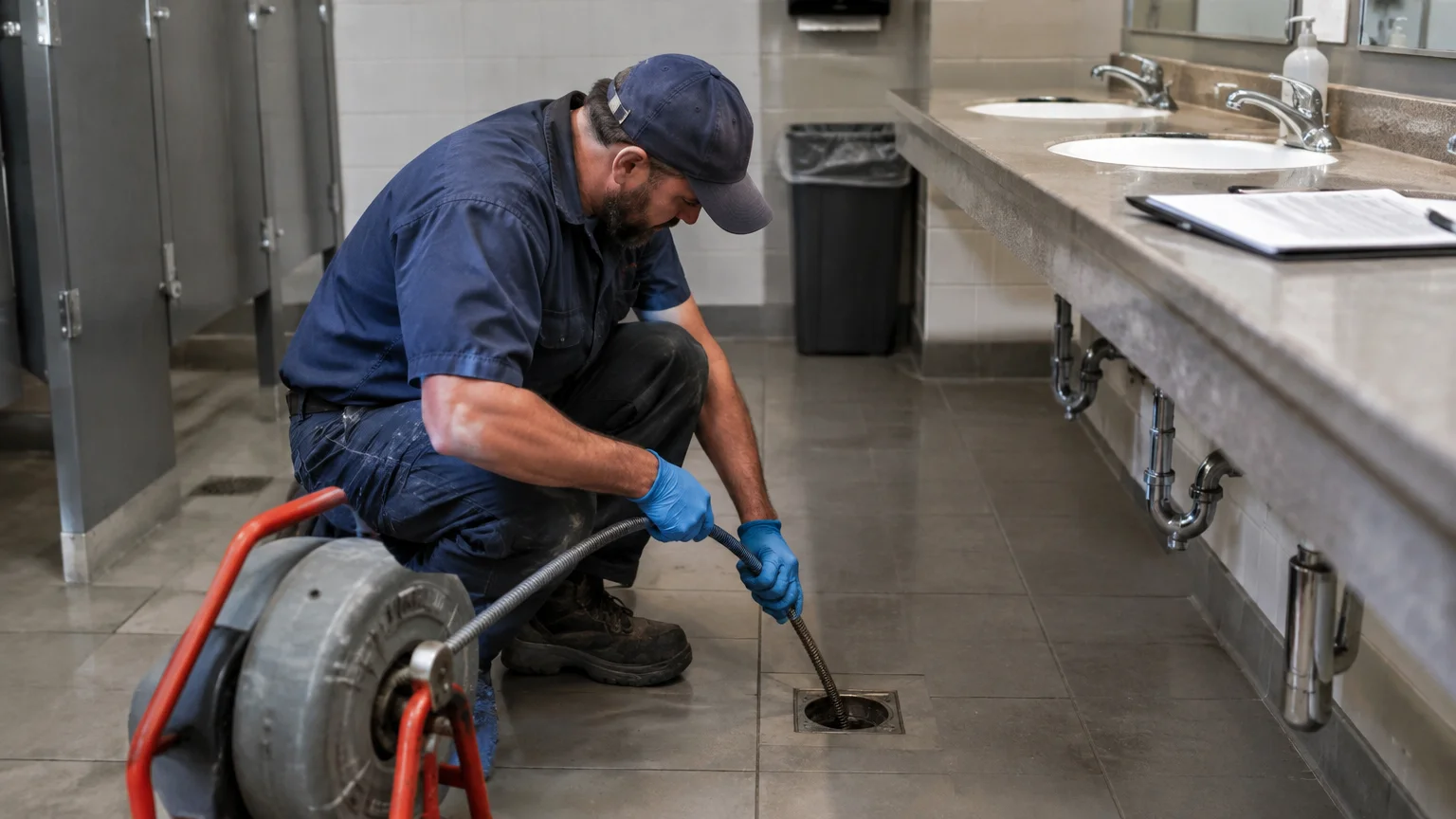
A camera inspection uses a small camera to view the inside of a drain pipe. It can help find waste, a blockage, or damage without opening every wall or floor. A plumber may also clear the line with tools made for drain work. The plumber should explain what they find and whether more work is needed.
Some plumbing problems may look alike but need different checks. Low water pressure, a toilet that keeps running, and a slow drain are not the same issue. A toilet that flushes poorly may need toilet repair, while a running toilet may need its fill or flush parts checked. Describe what is happening rather than guess at the cause. If you smell gas, leave the area and follow emergency safety steps. Do not test for a leak or use plumbing tools.
How can businesses prevent recurring slow drains?
Businesses can help prevent repeat drain trouble by keeping waste out of sinks, cleaning strainers, and checking fixtures on a regular schedule. Managers should track repeat problems and arrange professional care when clogs return. Good habits help, but they cannot prevent every pipe or vent issue.
Put clear reminders near sinks about what belongs in a bin. Use strainers in break-room sinks to catch food scraps. Place grease and cooking oil in suitable waste containers, not in the sink. In restrooms, provide waste bins and keep paper towels and wipes out of toilets. Simple reminders can help staff and visitors use fixtures with care.
A building care plan should say who checks shared restrooms and break rooms. During routine cleaning, staff can look for slow flow, bad smells, leaks, and loose drain covers. Managers can record the date, place, and repair for each issue. These notes may show that one fixture or shared line needs a closer look.
For multi-unit buildings, property managers can give tenants a clear way to report drain problems. Reports from nearby units may help reveal a shared line issue. Managers should keep access details and past service records ready for the plumber. This can help the visit focus on the right part of the system.
Routine professional care may include checking drains, clearing buildup, and reviewing repeat trouble spots. The right schedule depends on how many people use the building, what enters the drains, and the system’s condition. Grand Terrace Plumber can help businesses consider drain care as part of their wider plumbing needs. In Grand Terrace and nearby communities, a written care plan can help managers spot patterns and respond clearly.
Key takeaways
- Slow drains may point to buildup or trouble in a shared line.
- Hair, soap, food, and grease can narrow pipes over time.
- Repeat clogs, odors, backups, and several slow fixtures need attention.
- Staff can remove visible waste but should avoid harsh chemicals and deep tools.
- Regular checks and clear reports can help businesses spot problems sooner.
Frequently Asked Questions
Can staff safely clear a slow commercial sink?
Staff can remove visible waste from a strainer and clean the sink area when it is safe. They should not mix chemicals, push tools deep into pipes, or keep using a fixture that backs up. If the drain stays slow or the problem returns, tell the building manager and arrange a plumbing check.
Why do several drains slow down at the same time?
Several slow fixtures may share a branch line or connect to a larger drain. A blockage in that shared path can affect more than one sink or restroom. Note which fixtures are affected and where they are. A plumber can check if the issue is local or shared.
Are drain odors a sign of a serious plumbing problem?
A bad smell may come from waste or buildup in a drain, but other causes are possible. A dry trap or vent problem can also let odors into a room. If the smell remains after basic cleaning, or comes with gurgling or slow flow, have the drain checked.
What should a business do if a restroom drain backs up?
Stop using the affected fixtures and keep people away from wastewater. Tell the building manager and arrange urgent plumbing help. Do not pour chemicals into standing water or try to force the blockage through. If water is spreading, follow the building’s safety steps and protect nearby items only when safe.
How can break-room sinks stay clear?
Use a strainer to catch food scraps, and put grease and oil in a waste container. Wipe plates and pans before washing them, and do not pour food waste into the sink. Staff should report slow flow early. These habits help, but repeat clogs still need a plumber to find the cause.
Conclusion
Slow drains may begin with simple buildup, but repeat trouble can point to a shared line or another plumbing issue. Staff can take safe first steps, while managers track symptoms and keep unsafe fixtures out of use. Regular care helps protect restrooms, break rooms, and daily work in Grand Terrace.
Contact us to discuss slow drains or commercial plumbing support for your property.