Restaurant drain clogs often start with grease, food scraps, soap, and dirt entering kitchen pipes. Daily cleaning, drain screens, proper waste handling, and planned commercial drain cleaning can help prevent them. Slow flow, bad smells, gurgling, and backups may signal a deeper drain or sewer issue.
Table of Contents
- Why do restaurant drains keep clogging?
- What causes grease to harden inside commercial drain lines?
- Which restaurant drains are most likely to become blocked?
- What are the warning signs of a restaurant drain problem?
- How can restaurants prevent recurring drain clogs?
- How often should commercial restaurant drains be cleaned?
- When should a restaurant call a licensed commercial plumber?
- Frequently Asked Questions
- Key takeaways
- Conclusion
Why do restaurant drains keep clogging?
Restaurant drains keep clogging because busy kitchens send much more waste into pipes than most homes. Grease, food scraps, starch, soap, and dirt can stick to pipe walls. The open space gets smaller, water slows down, and a full blockage can follow.
How grease, food waste, and debris build up
Small scraps can pass through a sink during a busy shift. Rice, pasta, flour, coffee grounds, vegetables, and meat waste may settle in pipe bends. Grease then coats these scraps and holds them together. Over time, this forms a thick mass that water cannot move well.
A drain screen catches larger scraps before they enter the pipe. Staff should scrape plates into trash or approved food-waste containers. Sinks should never be used to wash large amounts of food waste away.
Why high-volume kitchen operations increase blockage risk
A restaurant may use many sinks, dishwashers, floor drains, and prep stations each day. Every fixture adds water and waste to the drainage system. A pipe that handles normal flow in the morning may struggle after hours of heavy use.
Older pipes, poor pipe slope, damaged joints, and shared sewer lines can add to the problem. Grand Terrace Plumber can help restaurant owners look for the real source instead of treating only the visible symptom. Drain cleaning may remove buildup, but repeated clogs often need a wider inspection.
What causes grease to harden inside commercial drain lines?
Grease hardens when fats, oils, and grease cool inside a drain line. It may stay liquid near a hot sink, then stick to colder pipe walls farther away. More food waste can attach to this layer until water has little room to pass.
How fats, oils, and grease affect pipes
Fats, oils, and grease are often called FOG in commercial plumbing. FOG includes cooking oil, meat fat, butter, sauces, and oily food residue. It can coat the inside of a pipe and reduce the space available for water.
Grease can also collect in traps, bends, and low points. A grease interceptor is a tank that separates grease from wastewater. If it is the wrong size, poorly cleaned, or not used correctly, more grease may reach the main drain system.
Why hot water does not remove grease permanently
Hot water may move soft grease for a short distance, but it does not remove grease from the whole system. As the water cools, the grease can stick to another part of the pipe. Repeated flushing may only move the problem farther downstream.
Dish soap may break up some surface residue, but it is not a full drain treatment. Restaurants should collect used oil and grease in approved containers. Staff should not pour cooking oil, sauces, or thick food waste into sinks. Chemical drain products can harm pipes, workers, or treatment systems when used without proper guidance.
Which restaurant drains are most likely to become blocked?
Kitchen sinks, floor drains, dishwashing areas, and main sewer lines face the highest blockage risk. Each area receives different waste, but all can suffer when food, grease, or dirt enters the wrong drain.
Kitchen sinks, floor drains, and dishwashing areas
Three-compartment sinks and prep sinks often collect food particles and grease. Dishwashing areas may add detergent, starch, and loose scraps. Floor drains can collect mop water, dirt, food pieces, and grease from spills.
A floor drain may have a trap that holds water and blocks sewer gases. If that trap becomes dirty or dry, odors may enter the building. Staff can remove visible debris from a drain cover and rinse the area safely. They should not reach into a deep drain or use harsh chemicals without clear instructions.
Main sewer lines and shared commercial plumbing
A blockage beyond one fixture may affect several sinks or floor drains. This can point to a branch line or main sewer line problem. Shared commercial plumbing may also carry waste from more than one tenant or food service area.
When several fixtures drain slowly at once, the issue is less likely to be one small sink clog. A Sewer Backup Plumber may need to inspect the line with professional tools. Sewer Line Repair may be needed when roots, broken pipe sections, crushed lines, or heavy deposits cause repeated failure.
What are the warning signs of a restaurant drain problem?
Warning signs include slow drainage, bad odors, gurgling sounds, standing water, and repeat backups. Staff should record and report these signs early. Quick action may limit water damage and reduce trouble during service.
Slow drainage, odors, gurgling, and recurring backups
A slow sink may have buildup near the trap or farther along the branch line. A bad smell may come from trapped food, grease, a dry trap, or sewer gas. Gurgling can happen when air moves through a partly blocked pipe.
Staff should note which fixture has the issue and when it happens. A clog that appears only during peak service may show that the pipe has limited capacity. A backup that returns after basic cleaning suggests that waste remains in the line or the pipe has a deeper defect.
When a minor blockage may indicate a sewer line issue
One slow sink does not always mean a main sewer problem. However, several affected fixtures, wastewater on the floor, or sewage coming from a floor drain needs prompt attention. These signs may mean the blockage is downstream from individual fixtures.
Businesses should stop using affected fixtures when wastewater rises. Keep staff and customers away from contaminated water. Do not mix drain chemicals or enter a confined space to inspect a sewer line. Emergency Drain Cleaning may be needed when a backup threatens health, equipment, or business operations.
How can restaurants prevent recurring drain clogs?
Restaurants can prevent many recurring clogs with staff training, waste control, drain screens, and planned upkeep. Prevention works best as part of daily closing duties, not only after a backup.
Daily kitchen practices and staff procedures
A simple routine can reduce the waste that enters the plumbing system. Managers should train every shift and check that staff follow the process during busy periods.
- Scrape plates and pans into the correct waste container before washing them.
- Wipe oily cookware with an approved absorbent material before rinsing.
- Keep drain screens in place and empty them into trash often.
- Store used cooking oil in approved containers for proper collection.
- Clean sink basins, strainers, and floor drain covers after each shift.
- Record slow drains, odors, backups, and repeat trouble spots for review.
These tasks are safe for trained staff because they involve cleaning and waste handling. They do not replace professional work on a blocked main line, damaged pipe, grease interceptor, or contaminated backup.
Drain screens, grease interceptors, and proper waste disposal
Drain screens catch larger material before it reaches the pipe. Grease interceptors separate grease from wastewater, but they still need proper use and regular care. Their size, design, condition, and cleaning needs depend on the site and local rules.
A manager should follow the maker’s instructions and local requirements. Staff should not remove a screen during busy service just to make water drain faster. That choice may move waste into a harder-to-reach part of the system.
How often should commercial restaurant drains be cleaned?
Commercial restaurant drains should be cleaned on a schedule based on use, waste levels, pipe condition, and past blockage history. No single schedule fits every kitchen. A busy restaurant with repeated grease trouble may need service more often than a low-volume food business.
Factors that determine a suitable cleaning schedule
A plumber may review the number of meals served, the type of cooking, the amount of grease used, the age of the pipes, and the layout of the drainage system. The condition of drain traps, grease interceptors, and sewer connections also matters.
A useful maintenance record should show each cleaning date, the affected fixture, the waste found, and whether flow improved. If the same line blocks again soon after cleaning, the record may help reveal a deeper cause.
Why preventive maintenance is different from emergency clearing
Emergency clearing focuses on restoring flow after a blockage. Preventive maintenance aims to remove buildup before it stops normal work. A planned visit may allow safer work, better timing, and a closer review of the system.
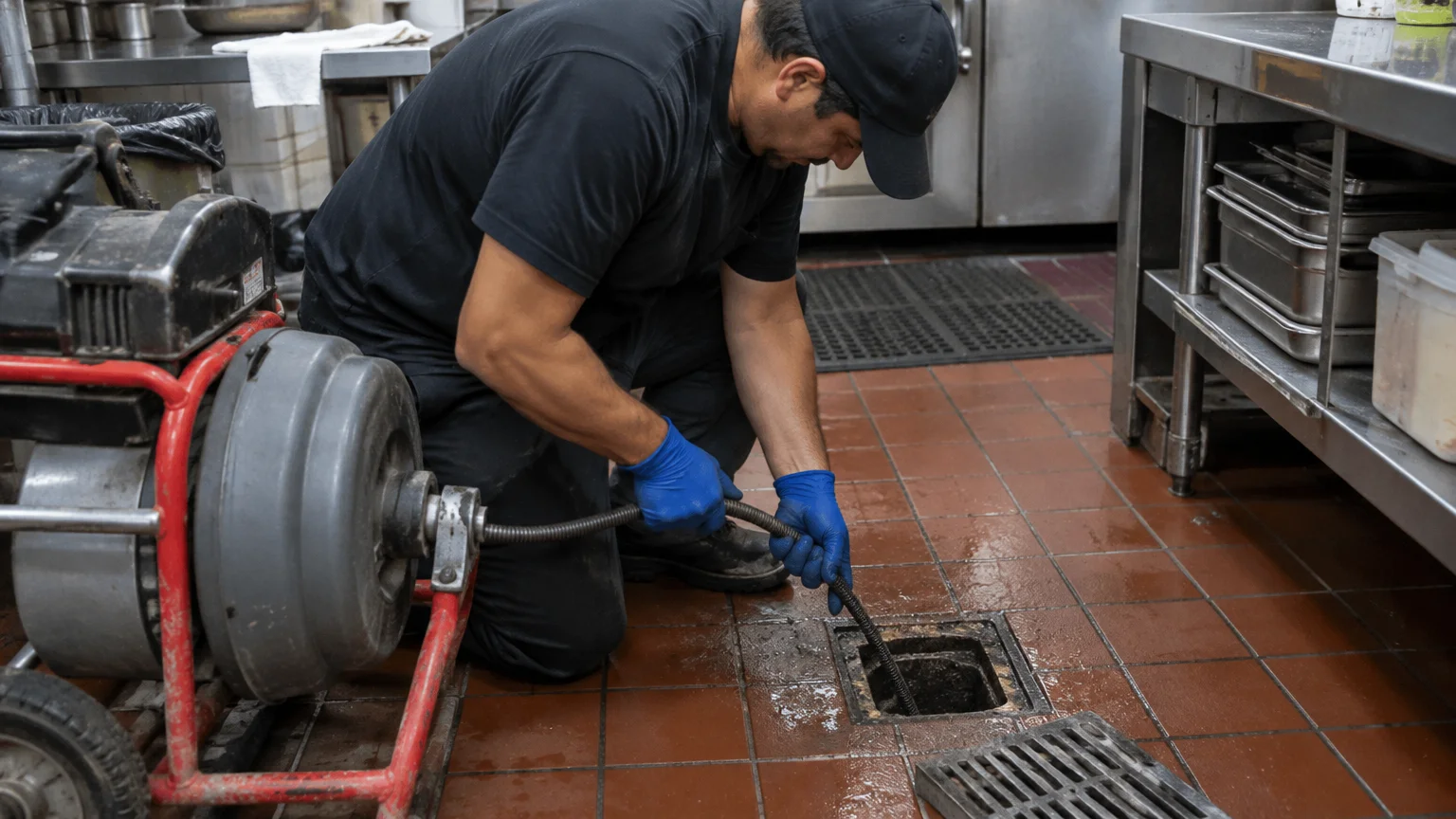
Drain cleaning equipment should match the pipe, access point, and blockage. A professional may use a drain plumbing snake for a local obstruction or water-jetting equipment for suitable heavy buildup. The right method depends on the line and its condition. A snake may open a path without removing every layer of grease.
When should a restaurant call a licensed commercial plumber?
A restaurant should call a licensed commercial plumber when drains keep blocking, several fixtures are affected, wastewater backs up, or staff cannot clear the issue safely. Professional help is also needed when a pipe, sewer line, grease interceptor, or drain connection may be damaged.
Situations that require professional drain inspection or repair
Seek professional help when a blockage returns after basic cleaning, sewage enters the building, or a drain problem affects food preparation areas. A plumber should also inspect unexplained odors, repeated gurgling, sudden loss of flow, and water around cleanouts or floor drains.
Home remedies such as cleaning drain vinegar baking soda may help loosen light surface residue in some household drains. They are not a reliable answer for commercial grease buildup. Baking soda and vinegar should not be mixed with chemical drain cleaners. Restaurant staff should avoid testing products when a blockage affects several fixtures.
What to expect during commercial drain service
A plumber will usually ask about symptoms, affected fixtures, recent backups, and past cleaning. The inspection may include access points, traps, branch lines, cleanouts, and the main sewer connection. A camera or other tool may be used when the blockage location is unclear.
The recommended work depends on the inspection results. A local clog may need clearing, while heavy grease, damaged pipe sections, or a sewer defect may need added repair. The final cost depends on the parts, access, line size, damage, and urgency. It is confirmed on a quote before approved work begins.
Grand Terrace Plumber provides plumbing support for commercial properties in and near Grand Terrace. This includes areas such as Downtown Grand Terrace, Blue Mountain, Highgrove, Colton, Loma Linda, Riverside, South San Bernardino, and nearby Inland Empire communities. Local conditions, building age, and each property’s layout can affect the best next step.
Frequently Asked Questions
Can hot water prevent restaurant drain clogs?
Hot water may move soft residue for a short time, but it does not remove grease from the full drain line. As water cools, grease can harden again on pipe walls. Restaurants should control waste at the source, use screens, manage used oil, and arrange suitable drain maintenance.
Is drain cleaning enzyme safe for commercial kitchens?
Drain cleaning enzymes may help break down some organic material, but they do not solve every blockage. Their use must match product directions, pipe materials, local rules, and site needs. Enzymes cannot repair damaged pipes or remove severe grease buildup without proper inspection.
What should staff do during a sewer backup?
Staff should stop using affected fixtures and keep people away from contaminated water. The area should be isolated until it can be cleaned safely. Workers should not mix chemicals or enter a drain, pit, or confined space. A licensed plumber should inspect the cause before normal use resumes.
Can a restaurant clear a small drain clog without a plumber?
Staff can remove visible debris, clean a drain screen, and wipe grease from reachable surfaces. They should not take apart deep pipework, use harsh chemicals, or work on a main sewer line. A licensed plumber is needed when the clog returns, affects several fixtures, or creates a health risk.
What causes drain odors after cleaning?
Odors may come from trapped food, grease left inside the line, a dry trap, poor venting, or a sewer connection problem. Cleaning the visible drain cover may not remove the source. Recurring smells should be inspected, especially when they occur with slow flow or gurgling.
Key takeaways
- Grease and food waste are leading causes of commercial drain blockages.
- Hot water may move grease but does not remove it permanently.
- Drain screens, waste controls, and staff training help reduce buildup.
- Several slow fixtures or a sewer backup may signal a main line problem.
- Recurring blockages need professional inspection, not repeated chemical treatment.
Conclusion
Restaurant drain clogs can interrupt service, damage property, and create unsafe conditions. Daily waste control is the first defense, while planned maintenance helps manage buildup before it becomes an emergency. When symptoms return or several drains are affected, professional inspection can find the cause.
If you are not sure what you are dealing with, it is worth having someone look at it before it turns into a bigger job. Get in touch with Grand Terrace Plumber today and we will tell you where you stand.