

Hidden water leak signs in Grand Terrace often appear as musty odors, bubbling or peeling paint, warped flooring, unexplained ceiling stains, and a water meter that moves when no fixtures are running. Use simple checks—like a shutoff-and-meter test—to confirm activity, then act quickly to prevent mold, structural damage, and higher repair costs.
Worried a small stain or smell means trouble at your place in Grand Terrace? This guide explains how to read the clues, test with simple tools, and decide when to call Grand Terrace Plumber for skilled leak detection and repair.
Table of Contents
- What are hidden water leak signs, and why do they matter?
- How can you tell there’s a leak behind a wall?
- What hidden water leak signs show up under floors?
- Are ceiling stains the only warning of a leak above?
- Which sounds and smells point to a concealed leak?
- Can your water bill or meter confirm a hidden leak?
- What health and safety risks come with hidden moisture?
- Which DIY tools and tests help locate hidden moisture?
- When should you call a licensed plumber—and what will they do?
- How do you prevent hidden leaks and limit water damage long-term?
- Frequently Asked Questions
- Key takeaways
- Conclusion
What are hidden water leak signs, and why do they matter?
Hidden leaks are water losses you cannot spot immediately. They lurk in wall cavities, beneath flooring, in ceilings, and under slabs. Early indicators include musty odors, lifting or blistering paint, darkened patches, warped boards, and a spinning water meter when no taps are open. These clues signal active water movement that needs prompt attention.
A hidden leak is any escape of water from pipes, fittings, valves, or fixtures that is not plainly visible. It might be a slow pinhole seep in copper or PEX or a sudden split in a pressurized line. Over time, even small drips saturate building materials. Drywall softens, insulation holds moisture, and wood swells—conditions that invite mold and decay.
Minor leaks often escalate because water travels with gravity and wicks through porous surfaces. The source can be several feet from the first sign. A steady drip can stain baseboards, loosen tiles, or corrode wiring at a GFCI outlet. Patterns matter: a musty coat closet, a consistently warm patch on a slab, or a fine, spreading paint line all add up to a likely leak.
Why it matters: once materials get wet, damage can progress quickly. Mold may begin forming within 24–48 hours on damp drywall. Load-bearing members can weaken, floors can deform, and metal parts can corrode. What starts as a small patch job can become wall openings, structural drying, and reconstruction. Swift action usually keeps the repair smaller and cleaner.
If you suspect a leak at your home or business in Grand Terrace, document what you see and smell, perform a quick meter check, and bring in a licensed plumber if results point to active flow. Grand Terrace Plumber handles emergency plumbing, leak detection, and pipe repairs across Grand Terrace to stop water at the source and limit damage.
What counts as a hidden leak and its early signals
Hidden leaks include pinholes in supply piping, worn valve stems, cracked fittings, sweating on cold lines that wets finishes, and seeping drain joints. Early red flags are subtle: a faint stain that slowly expands, paint that bubbles more than once, grout that never fully dries, or flooring edges that start to rise.
How small leaks escalate into major damage
Moisture undermines adhesives, feeds mold, corrodes metal fasteners, and swells wood and MDF. Over time, a cosmetic issue grows into structural repair—more invasive, more time-consuming, and more disruptive. Early detection and drying interrupt that cascade.
How can you tell there’s a leak behind a wall?
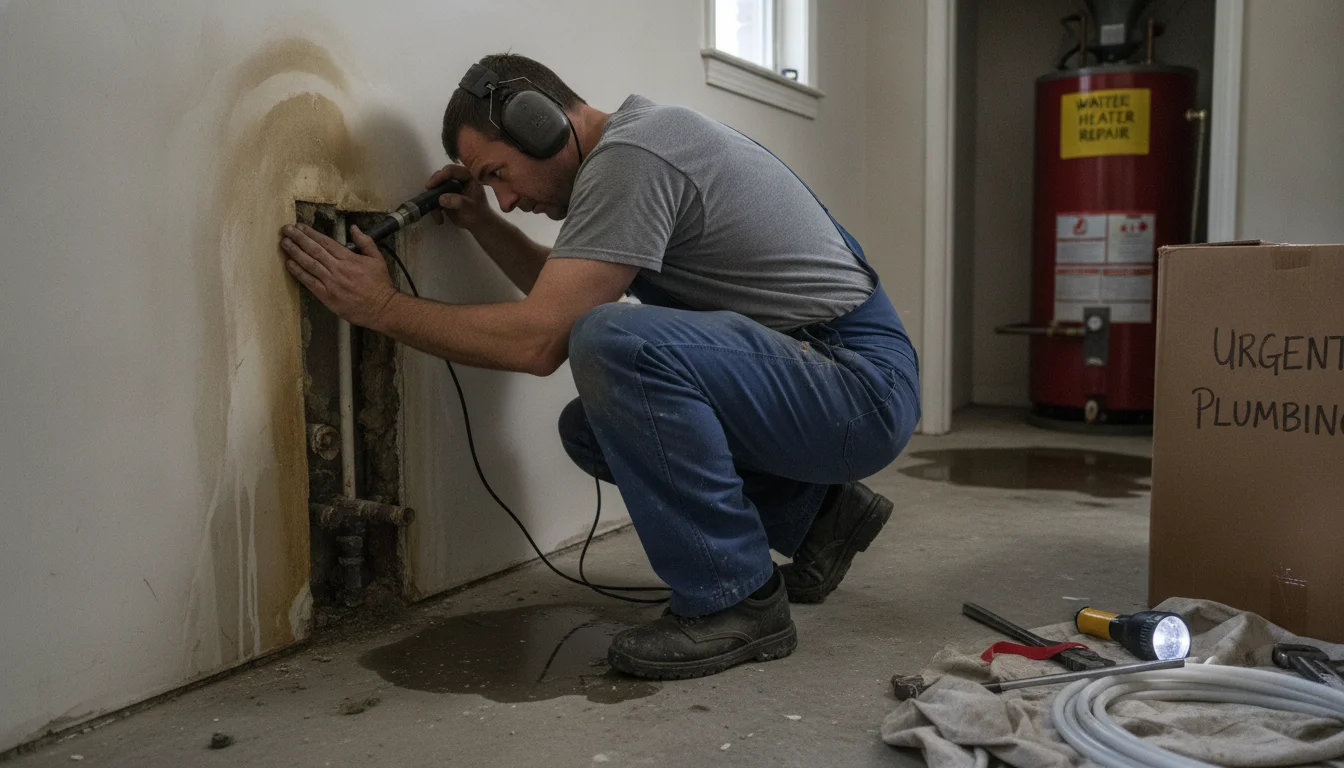
Wall leaks often reveal themselves at the surface first. Look for paint that lifts, blisters, or flakes. Drywall may bulge slightly, feel spongy, or crumble at corners. You may notice faint tan or brown rings. Baseboards can swell or separate from the wall. In tiled bathrooms, grout that stays dark or damp long after a shower can be a giveaway.
Touch suspicious areas. Are they cool or damp compared to nearby surfaces? Press lightly; soft drywall suggests moisture within the cavity. Run a clean tissue along the baseboard seam; if it comes away damp, mark the spot. Track whether staining appears or grows after you use certain fixtures, like the shower or washing machine. Timing helps pinpoint the likely source.
Rule out surface condensation. In humid rooms, cold pipes can sweat and drip externally, wetting surrounding finishes. Improve ventilation and see if the area dries. If not, and staining returns, a hidden leak is likely.
Listening can help. A faint hiss can indicate pressure escaping through a small opening. An occasional drip can echo in hollow walls. Shut nearby fixtures, stand quietly, and note what you hear.
Visual and tactile clues on drywall and paint
- Bubbling or peeling paint that returns after drying
- Soft drywall that dents with light finger pressure
- Linear stains that follow studs or tape seams
- Swollen baseboards or shoe molding gaps
- Persistent grout discoloration around tub and shower surrounds
Simple shutoff and meter checks for wall leaks
Do a quick test:
- Turn off all fixtures and appliances that use water.
- Note the water meter reading. Many meters have a small leak dial that rotates with tiny flows.
- Wait 20–30 minutes with no water use.
- Recheck the meter. Any movement indicates a leak.
- To isolate, close the main house valve. If the meter still moves, the leak is between the meter and the home. If it stops, the problem is on the home’s side.
If the dial moves only when a particular valve is open (for example, the cold side to a bathroom), the issue may sit along that run. Share your notes with a licensed plumber to speed diagnosis.
What hidden water leak signs show up under floors?
Floors can hide significant moisture. Under hardwood, boards may cup (edges higher) or crown (center higher). Gaps appear between planks, and finishes can crack. Tile may loosen, grout can crumble, and hairline cracks can radiate outward. On vinyl or laminate, edges may lift or bubble. A spongy, hollow, or uneven feel underfoot points to problems below.
On a concrete slab, a consistently warm spot can indicate a hot-water line leak, while a cool damp patch can hint at a cold-line leak. In quiet times, you may hear faint water movement. Interior doors that suddenly stick can reflect subfloor swelling. Area rugs that won’t dry at the edges are another sign.
Kitchens often see leaks from dishwashers and refrigerators with supply lines. In bathrooms, a failing toilet wax ring can seep slowly and saturate subflooring. Water frequently follows joists, so visible damage may appear in a different room from the source. If you know the direction of floor framing, use it to trace the path.
Crawlspaces are telling. Carefully look under suspect rooms with a light: drips on the underside of subfloor, wet or sagging insulation, and fresh mineral tracks on pipes are strong clues. Exercise caution—avoid contact with wiring and watch for standing water.
Hardwood, tile, and slab indicators
- Hardwood cupping or crowning that persists through dry weather
- Loose or hollow-sounding tile and cracking grout lines
- Vinyl or laminate bubbles near sinks, dishwashers, or fridges
- Warm or cold slab spots that align with known pipe runs
Radiant heat and crawlspace red flags
Hydronic radiant heat leaks can show as uneven warmth, frequent boiler refill needs, or new stains on the slab. In crawlspaces, look for active drips, rust on metal hangers, and damp insulation batts. Any of these signs justify prompt inspection to prevent rot and mold.
Are ceiling stains the only warning of a leak above?
Ceiling stains are common, but not the only warning. Sagging drywall, bubbling paint, or seams telegraphing through may appear first. Nail pops or spidering hairline cracks can spread. In bathrooms, peeling or discoloration near the ceiling vent can indicate excessive moisture or a nearby slow leak.
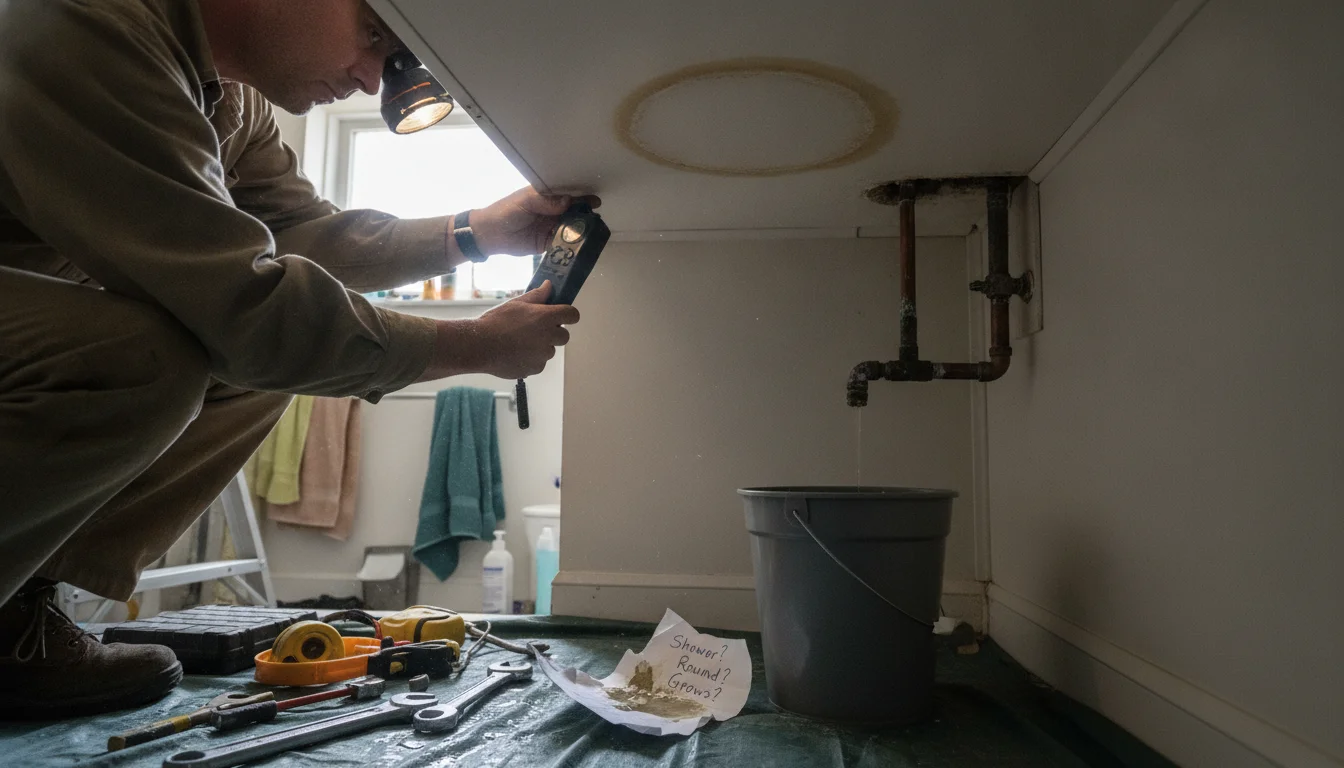
Water can pool above a ceiling before it shows. Press gently with a knuckle near a stain; if it feels soft or gives, moisture may be present. Avoid puncturing without a plan—collected water can release quickly. Place a bucket before relieving pressure to prevent collapse and collateral damage.
Fresh stains after storms could indicate roofing issues. Marks that expand after showers may signal a plumbing problem. Track timing: if a stain grows only with fixture use, suspect piping; if it grows with rain, investigate roofing or flashing.
In multi-story homes, check the room above the stain. Inspect under tubs, around toilets, and near laundry appliances. A loose supply connector or failed caulk joint can admit water. Small drips over time can create wide stains below.
Sagging drywall, bubbling paint, and seam lines
- Sagging or pillowy drywall suggests pooled water above
- Bubbles in paint that recur soon after drying
- Sharp seam lines where joint tape lifts or splits
- Rusted ceiling fixtures such as fan housings or recessed lights
Attic clues and telling roof vs. plumbing leaks apart
In the attic, look for wet roof decking, rusty nail points, or damp insulation. Roof leaks often leave dark trails from higher to lower points. Plumbing leaks typically show near vent stacks or runs below bathrooms. If the stain is round and grows after a shower, plumbing is likely. If it follows rafters and grows after rain, suspect the roof.
Which sounds and smells point to a concealed leak?
Your nose and ears can be your best early-warning tools. A new musty odor in a closet, bathroom, or cabinet can be the first sign. Musty typically means mold is digesting damp material. If odors intensify after running a shower or washer, focus on those lines. Smells that persist after cleaning suggest hidden moisture.
Listen for dripping, hissing, or a running-water hum when no fixtures are on. Drips can resonate within wall cavities. Hissing often points to a pressurized supply leak. A faint whoosh near a slab can indicate a broken line under concrete.
Drain odors can confuse diagnosis. Sewer gas—with a sulfur note—relates to venting or trap problems, not fresh-water leaks. However, a failed toilet wax ring can leak both water and gas, so treat it as urgent.
Visible mold growth may appear as speckles on paint, dark patches on caulk, or fuzzy blooms on drywall. Hidden mold can still release spores and volatile organic compounds (VOCs)—gases from molds and wet materials that can irritate eyes and lungs. Moisture control is the remedy.
Dripping, hissing, and running-water noises
- Dripping in walls or ceilings after fixtures are off
- Steady hissing from a pressurized line leak
- A low running-water hum at the meter with no use indoors
Musty odors, mold growth, and VOCs
Persistent musty odors, visible mold spots, or headaches that ease outdoors can connect back to hidden moisture. Air out the area, locate and eliminate the water source, and dry the structure thoroughly to halt growth.
Can your water bill or meter confirm a hidden leak?
Yes. Your water meter offers an objective check. With all fixtures off, the dial should be still. If it moves, water is flowing somewhere. Many meters include a small leak indicator that spins even with tiny flows. A slow but steady rotation suggests a constant low-volume leak.
Bills can help confirm. Scan for unexpected usage increases from month to month without a lifestyle change. Seasonal swings—like summer irrigation—can explain some variation, but a winter jump indoors is unusual. Compare similar months year over year for a clearer picture.
Meters also aid in isolating problem areas. Close shutoff valves to suspect fixtures and watch the dial. If movement stops, that branch likely has the issue. Toilets are frequent culprits; hose bibs, ice maker lines, and water heaters also rank high.
Step-by-step water meter test
- Turn off all indoor and outdoor water use.
- Find the small leak dial on the meter and note its position.
- Wait 20–30 minutes without using water.
- Recheck the dial. Any movement indicates a leak.
- Close the main valve to the home. If the meter still moves, the leak is in the service line between the meter and the house. If it stops, the leak is inside the home.
Reading bill patterns and seasonal usage
Look for sudden spikes unlinked to guests, new appliances, or yard watering. If usage remains elevated across seasons, a hidden leak is probable. Share usage histories with your plumber—patterns can speed the search.
What health and safety risks come with hidden moisture?
Hidden moisture threatens both buildings and occupants. Mold thrives on damp drywall, wood, and paper-backed materials. It can aggravate allergies, worsen asthma, and irritate eyes and skin. Children, older adults, and those with respiratory conditions may be affected first. Keeping materials dry is the central defense.
Indoor air quality declines when mold or wet materials persist. Odors linger, and VOCs increase. Fresh air helps, but stopping the leak and drying the structure are essential. Fans alone won’t solve the source; water entry must be corrected.
Wet areas also create slip hazards. Water on tile or vinyl is often hard to see until someone steps on it. Towels are only a temporary measure—find and fix the leak to remove the risk.
Moisture and electricity are a dangerous combination. Water near outlets, junction boxes, or fixtures can cause shorts or shocks. Switch off power to wet circuits at the breaker if you suspect intrusion, and have a professional inspect before restoring power.
Over time, wood rot and metal corrosion weaken structural elements. Joists, subfloors, studs, and fasteners can lose integrity. Early drying and targeted repairs prevent larger structural work later.
Mold exposure, allergens, and indoor air quality
- Allergy or asthma flare-ups and musty odors after water use
- Visible mold spots or black/green staining on walls or ceilings
- Persistent humidity that ventilation alone doesn’t resolve
Electrical hazards, rot, and slip risks
If you see moisture near lights, switches, or outlets, cut power to that circuit. Use caution around wet floors. Arrange for professional leak detection, structural drying, and safe repairs to restore the area.
Which DIY tools and tests help locate hidden moisture?
Homeowners can safely run a few basic checks. A handheld moisture meter can scan drywall, baseboards, trim, and subfloor edges; readings higher than surrounding areas mark a wet zone. A simple infrared thermometer can reveal cooler areas from evaporation or warmer zones over hot-water line leaks.
Dye tablets or food coloring can test toilets: add to the tank, wait without flushing, and check whether the bowl discolors; if it does, the flapper leaks. You can also place dry salt-treated tissue (salt paper) at baseboards—salt clumps when exposed to dampness, showing a path.
A full pressure test is best left to a licensed plumber using a calibrated gauge and pump; do-it-yourself pressure work risks over-pressurizing lines. Thermal imagers can help but require interpretation—cold air can mimic a wet spot—so always confirm with a moisture meter.
Moisture meters and basic infrared checks
- Moisture meter: compare suspect areas to known dry zones
- Infrared thermometer: track hot/cool anomalies along probable pipe runs
Dye tablets, pressure tests, and salt paper
- Toilet dye test: quick screen for silent leaks
- Salt-treated tissue at trim: simple dampness indicator
- Pressure testing: ask a licensed plumber for safe, accurate results
When should you call a licensed plumber—and what will they do?
Call a licensed plumber when you find multiple signs at once, see any meter movement at rest, notice active drips, detect ceiling bulges, or experience persistent musty odors. Also call if water is near electrical components, if floors sag, or if you face an urgent burst or spray. Waiting typically expands the scope of repairs.
A professional will ask focused questions: when did you first notice the issue, how do signs change with fixture use, and what happened during your meter tests? Share photos, notes, and any timing you’ve tracked—this shortens the find.
Pros rely on methods that minimize damage. Acoustic listening narrows leak locations in walls. Thermal imaging maps temperature differences that often accompany wet materials. Moisture mapping outlines the spread. For slab leaks, line tracing and pressure isolation help pinpoint the problem. Sometimes a small, strategic opening is required to confirm and repair.
Repairs depend on cause and material. Pinholes in copper may be cut out and replaced; older or brittle sections may be repiped. Depending on code and conditions, PEX or copper may be the right choice. For drain issues, a joint, trap, or section may be rebuilt. Following the fix, structural drying—air movers and dehumidifiers—returns materials to safe levels.
Service options include Emergency Plumbing for urgent bursts and leaks, Leaks & Burst Pipes for detection and repair, and Water Heater Repair when hot-water lines or tanks cause problems. For gas appliance safety, Gas Line Plumbing ensures code-compliant work by qualified pros.
Urgent thresholds and decision points
- Any ceiling sag or active drip: urgent
- Meter spins with all fixtures off: call soon
- Water near outlets or panels: cut power and call now
Professional leak detection methods and repairs
Expect non-invasive tools first, targeted openings only as needed, and a clear repair plan. After repairs, pros retest to confirm the leak is eliminated before closing any access.
How do you prevent hidden leaks and limit water damage long-term?
Prevention starts with routine observation. Check under sinks monthly. Feel for dampness and look for mineral tracks. Inspect around toilets, tubs, and showers. Address slow drains that can push water where it doesn’t belong. Replace brittle supply lines with braided stainless hoses. Add or upgrade shutoff valves so you can isolate fixtures quickly.
Keep water pressure in a healthy range. Excessive pressure stresses pipes, valves, and appliances. A plumber can test static and dynamic pressure and install a pressure-reducing valve if needed. Insulate pipes in unconditioned spaces to avoid winter bursts. Seal wall and floor penetrations so humid air won’t condense on cold pipes.
Choose durable materials during updates. Use quality valves and approved pipe types. Set water heaters to safe temperatures and service them per manufacturer recommendations to reduce leaks and scald risk. If your home has historically problematic piping, plan a proactive repipe instead of waiting for emergencies.
Document issues for insurance. Photograph damage, meter tests, and repair work. Keep receipts and notes. Know where your main shutoff is and make sure others in the home do too. Build a simple emergency plan: shut water, move valuables, and arrange help.
Maintenance checklist and better material choices
- Monthly checks under sinks and at water-using appliances
- Annual inspection of supply lines, valves, and the water heater
- Replace worn hoses with braided stainless
- Insulate pipes in attics, crawlspaces, and exterior walls
Insurance documentation and emergency readiness
Keep a folder with photos, readings, and receipts. Tag the main shutoff. Store towels, a flashlight, and a basic tool kit in one place. Quick, orderly action reduces water damage and disruption.
Frequently Asked Questions
What should I do first if I find a new ceiling stain?
Turn off water to fixtures above the stain if possible. Place a bucket under any sag. Avoid puncturing the ceiling without a plan. Perform a quick meter test to check for flow. If the stain grows or the meter moves, call a licensed plumber for leak detection.
How can I tell if a toilet is leaking without tools?
Add a few drops of food coloring or a dye tablet to the tank. Wait 10–15 minutes without flushing. If color appears in the bowl, the flapper is leaking. Silent toilet leaks are common hidden water leak signs and can inflate your bill.
Are musty odors always from a water leak?
Not always. High humidity, poor ventilation, or aging carpet can smell musty. However, a new musty odor near walls, closets, or bathrooms often indicates hidden moisture. Use a moisture meter on trim and drywall to compare to dry areas. If readings are elevated, investigate further.
Can a water heater cause hidden leaks?
Yes. Tanks can seep at fittings, valves, or through the tank body. Small leaks may drain into a pan and go unnoticed. Watch for rust streaks, damp pans, or clicking sounds. Water Heater Repair addresses tank and connection issues before they become major damage.
Who should I call for a burst pipe emergency?
Call a licensed plumber who provides Emergency Plumbing services. First, shut off the main water valve. Open a faucet to relieve pressure and move items away from the leak. Pros can stop the water, repair the line, and set up drying steps to protect your home.
Key takeaways
- Early clues matter: stains, odors, sounds, and meter movement often reveal hidden water leak signs.
- Simple tests help: shutoff-and-meter checks can confirm hidden flow before you open walls.
- Act quickly: fast response reduces mold, rot, and the scope of repairs.
- Pros have specialized tools: non-invasive detection and targeted repairs limit disruption.
- Prevention works: routine checks, better materials, and a clear emergency plan lower risk.
Conclusion
Hidden leaks start small but can affect your property quickly. Use the signs and tests in this guide to catch problems early, then rely on a licensed pro to confirm and fix the source. For trusted help Grand Terrace Plumber is ready to find the leak, protect your structure, and restore safety. Contact us.
If you are not sure which of these you are dealing with, it is worth having someone look at it before it turns into a bigger job. Get in touch with Grand Terrace Plumber today and we will tell you where you stand.