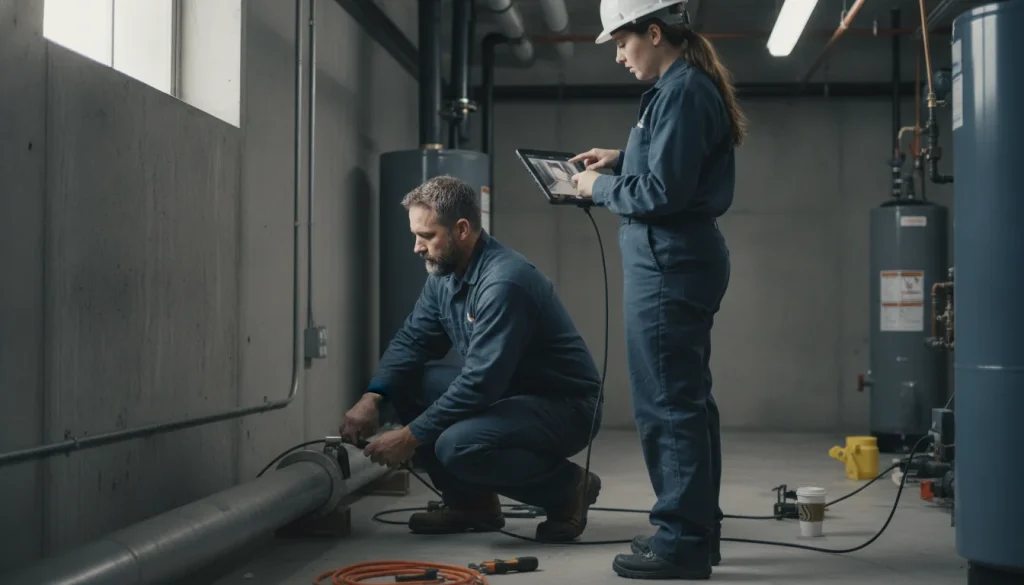
A pipe bursts before dawn. Tenants unlock doors to wet floors and stressed staff. One missed inspection can set this in motion. This guide outlines commercial plumbing inspection frequency and how to build a schedule that fits your site and California code so you can prevent downtime in Grand Terrace.
Here is the short answer: most businesses should schedule a full plumbing inspection every 6–12 months. Food service, healthcare, and schools do best with quarterly checks. Grease traps need monthly attention. Backflow testing follows local Authority Having Jurisdiction (AHJ) rules. Older buildings or hard water may call for more frequent visits.
Commercial plumbing inspection frequency means how often a licensed plumber reviews water supply, drains, safety devices, and code items to prevent failures and avoid emergency plumbing situations.
Recommended inspection intervals for commercial properties
Office and retail spaces usually run well with checks every 6–12 months. Usage is steady, but pressure swings, silent leaks, and aging fixtures still cause damage. A set schedule finds small problems early and can reduce later plumbing repair needs.
Restaurants and food service require more attention. Quarterly inspections help manage hot water demand, dish lines, and floor drains. Grease traps need monthly service to keep lines clear and meet health rules. A clogged grease line can shut a kitchen quickly and raise plumbing costs.
Multifamily and apartments have mixed needs. Inspect common areas and plant rooms twice a year. In‑unit checks work well once a year, often paired with routine filter or detector visits. That timing keeps access simple for tenants and staff.
Healthcare and education face higher risk. Plan quarterly inspections for main systems. Critical areas like labs, dental suites, and sterilizers may need monthly visual checks to protect care and uptime.
Warehouses and light industrial often fit an annual cycle. Still, backflow testing is mandatory on the schedule required by the AHJ. Many AHJs require yearly tests with current tags.
Factors that affect your inspection schedule
Start with the building’s story. Age, pipe type, and any leak or repair history matter. Old galvanized or mixed piping can corrode and clog. Added valves and quick fixes also raise the chance of future trouble.
Use and occupancy drive wear. More people, more fixtures, and peak times strain the system. Busy restrooms, kitchens, or process equipment add stress. Note seasonal surges, events, and holidays in Grand Terrace that change demand.
Water quality shapes risk. Hard water scales heaters and valves. Poor water can pit copper and stain fixtures. Cold snaps in Grand Terrace raise freeze risk for exposed or poorly insulated pipes.
Rules also set the pace. Insurance carriers, leases, and local codes in California may require inspections, records, and device testing. Keep proof on hand for owners and inspectors.
Last, consider risk tolerance. If an outage would stop revenue or tenant services, choose shorter intervals. Prevention costs vary, but downtime and repairs often cost far more.
What a professional commercial plumbing inspection includes
On the supply side, a technician checks shutoff valves, pressure‑reducing valves (PRVs), meters, and water heaters or boilers. A PRV is a valve that lowers incoming pressure to protect fixtures. The visit verifies setpoints, relief valves, and safe combustion where gas is used. Related needs may include Gas Line Plumbing when issues are found.
Drainage and venting get close attention. Pros may use camera scoping through cleanouts to see inside lines. Kitchen sites include grease lines. Basements often have ejector or sump pumps that need test runs. Findings may trigger Emergency Plumbing if an urgent fix is needed.
Leak detection and performance tests confirm system health. Teams run pressure checks, flow and temperature tests, and thermal scans to spot hidden leaks. These tests find small drips behind walls before they become claims.
Documentation ties it together. Reports cite IPC/UPC items, which are widely used US plumbing codes, and any AHJ forms needed for backflow devices. You get a repair roadmap with clear priorities and timing. Where upgrades make sense, you may plan Kitchen Plumbing, Water Softener Installation, or Bathroom Installations to reduce future risk.
Implementing a preventative plan with minimal disruption
Plan work when people are not on site. Off‑hours or phased, floor‑by‑floor visits keep sales and services running. Post notices so tenants know when water will be off.
Log each asset in a CMMS, which is software that tracks equipment, tasks, and history. Trend data shows failing valves, hot water gaps, or repeat clogs. That helps set smarter intervals and supports practical plumbing advice with evidence.
Bundle tasks by season. Test heat and recirculation before winter. Service roof drains before heavy rain. Align backflow, PRV checks, and heater service on the same day to cut visits.
Keep clear emergency protocols. Post shutoff maps, after‑hours steps, and who to call. Train staff on first moves for leaks, gas odors, or sewer backups. This keeps damage small while help is on the way.
A simple rollout looks like this:
- Set target intervals by use type and code needs.
- Build the asset list and enter it in the CMMS.
- Schedule off‑hours blocks and notify tenants.
- Complete the visit, document items, and assign repairs.
- Review trends each quarter and adjust the plan.
Frequently Asked Questions
### ### ### ### ### How do local codes affect inspection timing?
Local codes often set backflow test dates and documentation rules. Some AHJs require annual tests and tagged devices. Health departments can set grease trap service frequency. Insurance carriers may also require proof of inspections for coverage. Your plumber should confirm rules for Grand Terrace in California.
### ### ### ### ### What signs mean I should move to more frequent checks?
Look for recurring clogs, changing water pressure, stained ceiling tiles, or rising water bills. Short hot water supply and slow floor drains also warn of risk. If you fix the same issue twice in one year, shorten the interval until trends improve.
### ### ### ### ### Who should perform commercial inspections?
Use licensed commercial plumbers with code knowledge and test tools. They should provide photos, readings, and a clear report. Ask about camera scoping, thermal imaging, and backflow certification. Grand Terrace Plumber works across Grand Terrace every week and understands local AHJ processes and timelines.
Key takeaways
- Most offices and retail: inspect every 6–12 months; high‑risk sites quarterly.
- Grease traps per local rules; backflow testing per AHJ, often annual.
- Age, water quality, and occupancy decide how often to check.
- Inspections cover supply, drains, tests, and code documents with a repair plan.
- Use off‑hours, a CMMS, and clear protocols to cut downtime.
Conclusion
A steady inspection rhythm protects tenants, assets, and revenue. Grand Terrace Plumber helps owners and managers plan checks that fit use, code, and risk across Grand Terrace and nearby business districts. Get in touch with Grand Terrace Plumber today to plan checks for your site.